The Complete Local Business Marketing Playbook: 12 Strategies That Actually Work in 2026
Marketing is the number one challenge for small business owners today. It's noisy, the competition is fierce, and the sheer volume of "expert advice" is overwhelming. Most owners are either doing too little, relying entirely on word of mouth, or spreading themselves dangerously thin across a dozen disconnected tactics that don't compound.
If you've been searching for a definitive guide to local small business marketing strategies, you have found it. This isn't a list of theoretical ideas. This is the clear, prioritized playbook that the most successful local businesses are using right now to dominate their markets.
These are the 12 strategies that actually work in 2026. We will walk you through exactly what to do, why it matters, and how to execute it efficiently so you can stop chasing leads and start building a machine.
Table of Contents
How to Use This Playbook
To succeed, you must approach marketing as a layered system, not a random to-do list. If you try to run Facebook ads before you have a system to capture the leads, you will burn cash. If you try to build a loyalty program before you have a solid Google reputation, it will fall flat.
Start with the Foundation Strategies (1–3). These are your non-negotiables. Once your foundation is airtight, layer in the Growth Strategies (4–8) to scale your traffic and conversions. Finally, deploy the Amplifiers (9–12) to multiply your results and distance yourself from the competition.
| Strategy Tier | Strategies Included | Why Start Here |
|---|---|---|
| Foundation | Google Business Profile, Reputation, Lead Capture | Free, highest-ROI, plugs the leaks in your bucket. |
| Growth | SEO/Content, Paid Ads, Social Media, Automation | Scales traffic and compounds over time. |
| Amplifiers | Video, Partnerships, Loyalty, Voice Search | Multiplies the effectiveness of everything else. |
Foundation Strategies
Must Do First
Strategy 1 — Optimize Your Google Business Profile
Your Google Business Profile (GBP) is the new homepage for your local business. It is the first thing customers see, and often the only thing they need to make a decision.
Most businesses fill out their name, address, and phone number, and then abandon their profile. This is a massive mistake. Google rewards active, comprehensive profiles with higher rankings in the highly coveted "Local Pack" (the top three map results).
To win, you must fully optimize every section. Add high-quality photos weekly. Utilize the Q&A section to answer common customer objections before they even ask. Keep your hours meticulously updated, especially around holidays, to build trust with Google's algorithm.
Next Step: See our complete Google Business Profile guide to ensure you aren't missing critical ranking factors.
Strategy 2 — Build a Reputation Management System
Reviews are the ultimate digital currency. A systematic approach to collecting 5-star reviews is the most powerful local SEO tactic you can deploy.
Over 90% of consumers read reviews before choosing a local service. If your competitor has 150 reviews and you have 12, you will lose the click every time. The problem is that asking for reviews manually is awkward and inconsistent. You need a system that does the asking for you.
By automating review requests via SMS the moment a job is completed, you capture the customer at the peak of their satisfaction. Responding to every review—both positive and negative—signals to Google that you are an active, engaged business owner, which directly boosts your rankings.
Next Steps: Learn how to get more Google reviews without asking manually, and dive deep into building a bulletproof reputation management strategy.
Strategy 3 — Never Miss a Lead with Automated Lead Capture
Generating traffic is useless if your bucket is leaking. Automated lead capture ensures that every single inquiry receives an instant response.
When a customer calls and you don't answer, they don't leave a voicemail; they call the next business on Google. By implementing missed call text back, your system instantly texts the caller: "Sorry we missed you! How can we help?" This simple automation stops the search process in its tracks.
The same applies to your website. A static "Contact Us" form is too slow. Adding a conversational webchat widget allows visitors to text you directly from your site, instantly capturing their phone number and opening a direct line of communication.
Next Steps: Discover why your local business is losing leads after hours, learn how a webchat widget doubles lead capture, and finally stop losing leads for good.
Growth Strategies
Layer In Next
Strategy 4 — Build an Automated Lead Machine
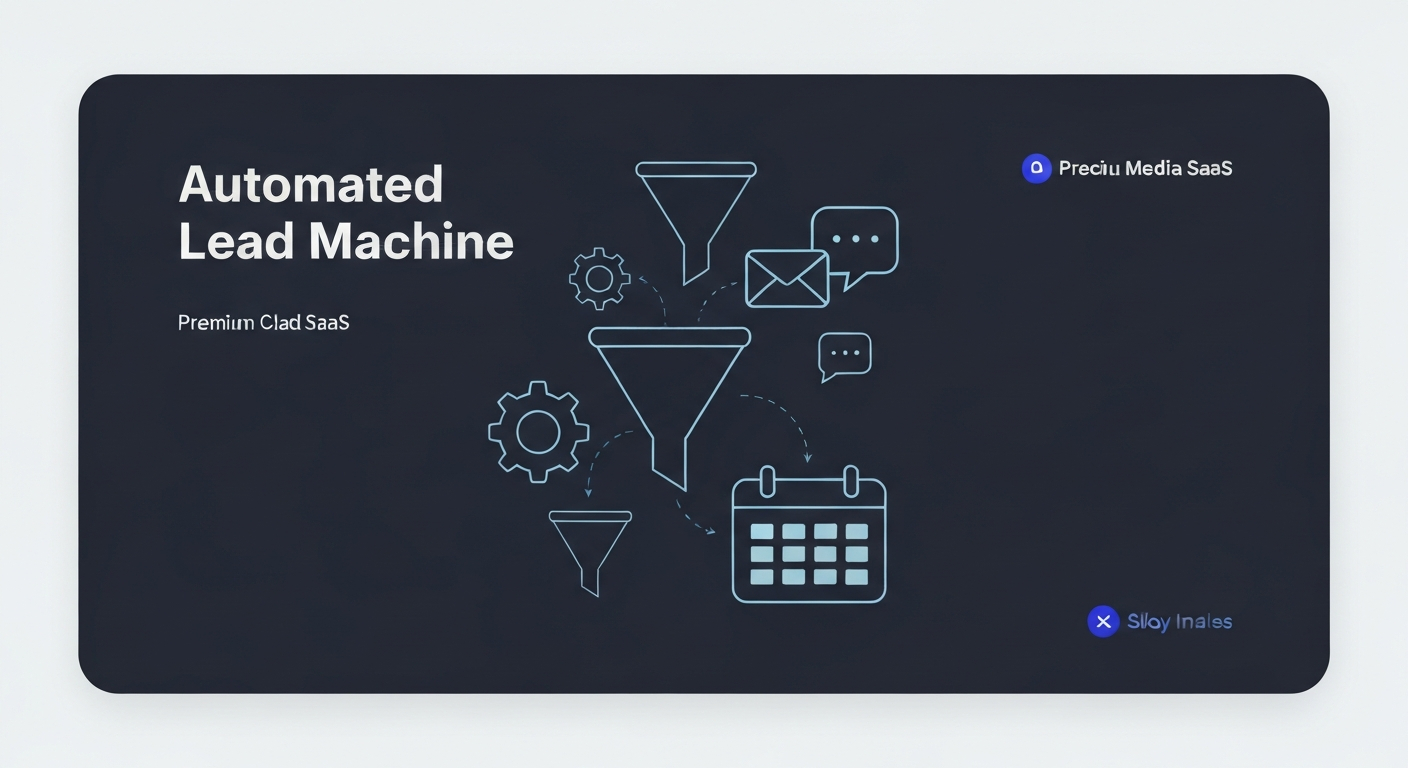
An automated lead machine replaces manual chasing with a 24/7 system that captures, nurtures, and closes prospects without your constant intervention.
The manual grind of sticky notes, forgotten follow-ups, and disorganized spreadsheets is the enemy of scale. A true lead machine operates on a simple framework: Capture the lead instantly, Nurture them with helpful multi-day sequences, and Close them via automated booking calendars.
Speed to lead is critical. If you don't respond within minutes, your conversion rate plummets. Automation ensures that every prospect feels like your only priority, receiving personalized texts and emails exactly when they need them, freeing you to focus on fulfilling the actual service.
Next Steps: Read the complete automated lead machine guide, understand why the fortune is in the follow-up (5-minute follow-up), and eliminate the hidden cost of manual entry.
Strategy 5 — Content Marketing & Local SEO Blogging
Content marketing is the compound interest of local SEO. By answering the specific questions your community is asking, you build long-term, free traffic.
Local SEO is no longer just about stuffing "plumber in [City]" into your footer. It's about providing genuine value. When you write a blog post about "How to prepare your Austin home's pipes for a freeze," you attract highly targeted local traffic right when they need your expertise.
To rank, your content must be structured correctly, load instantly, and live on a website optimized for conversions. A beautiful blog on a broken website is a waste of effort. Your content must seamlessly guide the reader toward a booking action.
Next Steps: Master local SEO beyond keywords and understand the anatomy of a high-converting website.
Strategy 6 — Social Media Marketing That Actually Converts
Social media for local business isn't about going viral globally; it's about building trust and authority locally.
Your customers will check your Facebook or Instagram before they hire you. If your last post was from 2023, they will assume you are out of business. You need a consistent mix of educational content, behind-the-scenes reality, and customer success stories.
The secret to consistency is automation. Instead of scrambling to post every day, use a social media scheduler to batch-create and schedule a month's worth of content in just a few hours. This ensures your brand stays top-of-mind while you run your business.
Next Steps: Develop a real social media strategy for local businesses and leverage social media automation to stay consistent.
Strategy 7 — Paid Search & Local Ads
Paid ads are gasoline. If your foundation is solid, they will explode your growth. If your bucket is leaky, they will burn your cash.
Google Local Service Ads (LSAs) and targeted Facebook campaigns are incredibly powerful for driving immediate, high-intent leads. However, the biggest mistake local businesses make is sending paid traffic to a generic homepage.
To see a real ROI, you must direct ad traffic to specific, offer-driven landing pages with clear calls-to-action. More importantly, you must have the tracking in place to know exactly which ad produced which booked appointment, allowing you to scale what works and cut what doesn't.
Next Step: Learn how to create local ads that convert instead of just generating clicks.
Strategy 8 — Appointment Automation & No-Show Prevention
A booked appointment isn't revenue until the customer actually shows up. Automated reminders protect your schedule and your bottom line.
No-shows cost local service businesses tens of thousands of dollars annually. The primary reason people miss appointments isn't malice; it's forgetfulness. A single confirmation email is no longer enough to combat busy schedules.
By deploying a strategic sequence of automated SMS and email reminders (e.g., 48 hours, 24 hours, and 2 hours prior), you keep the commitment top-of-mind. This simple automation can dramatically reduce your no-show rate and ensure your staff's time is always monetized.
Next Step: Implement the exact sequence on how to reduce no-shows by 80%.
Amplifier Strategies
Multiply Your Results
Strategy 9 — Short-Form Video Marketing
Short-form video is the highest-performing content format on the internet, and it is the fastest way to build local authority.
Platforms like Instagram Reels, TikTok, and YouTube Shorts allow you to reach thousands of local prospects organically. The best part? You don't even have to be on camera.
Time-lapse transformations, behind-the-scenes process videos, and satisfying before-and-afters perform exceptionally well for service businesses. Video proves your competence in seconds, bypassing the need for a lengthy sales pitch.
Next Step: Start filming using our guide to short-form video marketing for local businesses.
Strategy 10 — Cross-Promotions & Local Business Partnerships
Partnering with complementary local businesses allows you to double your reach and borrow established trust for free.
If you are a real estate agent, partnering with a local moving company or a mortgage broker makes perfect sense. You share the same demographic but don't compete.
By structuring simple cross-promotions—like shared email campaigns, co-hosted events, or referral swaps—you tap into a warm audience. When backed by an automated tracking system, these partnerships become a predictable, high-converting lead source.
Next Steps: Steal our cross-promotion ideas for local businesses and start building a referral engine today.
Strategy 11 — Digital Loyalty Programs & Customer Retention
Acquiring a new customer costs 5x more than retaining an existing one. A digital loyalty program turns one-time buyers into profitable regulars.
Paper punch cards are dead. Today's consumers expect seamless, mobile-first loyalty experiences. By integrating a digital rewards system into your CRM, you can automatically track visits and spend, triggering rewards without any manual effort.
Whether it's a points-based system, a VIP tier, or automated birthday surprises, rewarding your best customers guarantees they will return more often and refer their friends.
Next Step: Implement these proven loyalty program ideas for local small businesses.
Strategy 12 — Voice Search & AI Search Optimization
As consumers increasingly rely on Siri, Alexa, and AI tools like ChatGPT to find local services, optimizing for conversational search is no longer optional.
Voice searches are fundamentally different from typed searches. They are longer, question-based, and highly localized ("Who is the best emergency plumber near me right now?").
To ensure your business is the one recommended by AI, you must structure your website content conversationally, maintain flawless directory listings, and build a massive repository of positive reviews. AI engines rely heavily on sentiment and consensus to make their recommendations.
Next Step: Future-proof your business with voice search optimization for local businesses.
The One Thing That Makes All 12 Strategies Work Better
None of these strategies require a massive marketing team or a Fortune 500 budget. They require a SYSTEM.
The reason most local businesses fail to execute this playbook is that they try to piece it together using a dozen different software tools. They use one app for texting, another for emails, a third for scheduling, and a fourth for reviews. This "tool sprawl" creates data silos, breaks automations, and drains your time.
CastaLink is the unified platform that powers this entire playbook.
By bringing your CRM, communications, automations, reputation management, and funnel building into a single dashboard, you eliminate the friction. Your systems finally talk to each other, allowing you to execute world-class marketing on autopilot.
Final Steps: Discover how to replace 10+ tools with one platform, learn the benefits of consolidating your tech stack, and understand why you need SOPs in your business to scale efficiently.
The 12-Step Marketing Machine Checklist
Track your progress as you implement the playbook strategies.
CastaLink Marketing Playbook Checklist
1Foundation Strategies
2Growth Strategies
3Amplifier Strategies
Test Your Marketing Knowledge
Take this quick 3-question quiz to see how much of the playbook you've mastered.
Frequently Asked Questions
What is the most effective marketing strategy for a local business?
The most effective foundation is optimizing your Google Business Profile and automating your review collection. This builds the trust and visibility required to make all other marketing efforts (like ads and social media) actually convert.
How much should a local small business spend on marketing?
Most successful local businesses reinvest 7% to 10% of their gross revenue into marketing. However, before increasing ad spend, you should invest in automation tools to ensure you aren't losing the leads you already generate.
Do local service businesses really need social media?
Yes, but not for going viral. Social media acts as a secondary portfolio and trust signal. Customers will look at your Instagram or Facebook to see real examples of your work and verify that you are an active, reputable business.
How fast can I expect to see results from these strategies?
Foundation strategies like missed call text back and automated review requests yield results within days. Growth strategies like local SEO and content marketing typically take 3 to 6 months to compound into consistent lead flow.
Is paid advertising worth it for local businesses?
Paid ads are highly effective, but only if your lead capture system is airtight. If you run ads but miss calls or take hours to reply to forms, you are wasting money. Fix your follow-up first, then scale with ads.
What is the biggest marketing mistake local businesses make?
The biggest mistake is 'tool sprawl'—using 10 different disjointed software tools that don't talk to each other. This leads to manual data entry, missed follow-ups, and a fragmented customer experience.
The CastaLink Team
Growth Experts
We help local service businesses stop chasing leads and start building automated growth machines. Our team shares weekly insights on marketing automation, local SEO, and operational efficiency.
Read More Articles
How to Stop Losing Leads After Hours
Discover how AI booking assistants can capture and convert leads while you sleep.

The 5-Minute Follow-Up Rule is Dead
Why instant text-backs are replacing the traditional 5-minute follow-up rule in local service businesses.
